(And How to Avoid Them)
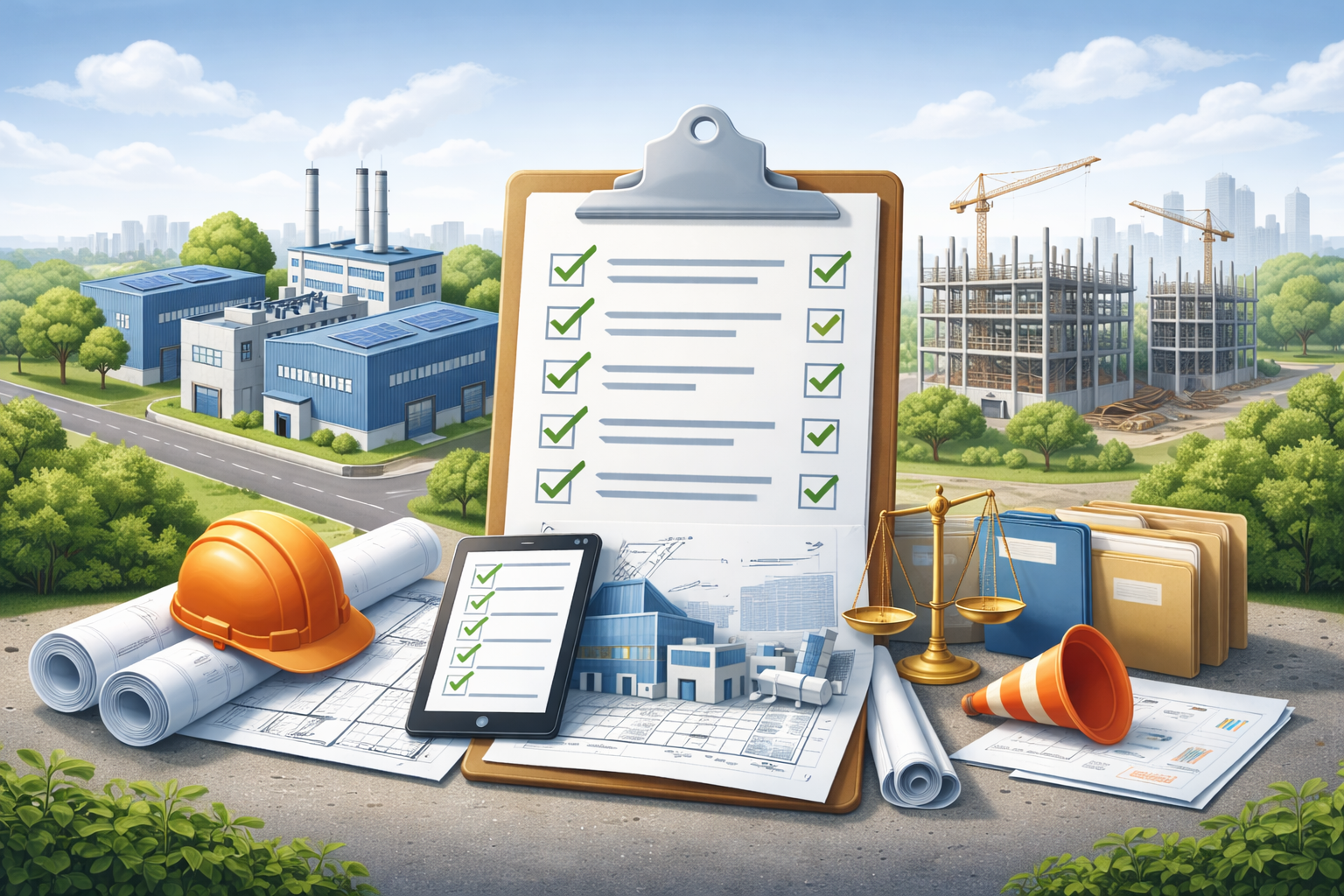
Industrial development is as much about compliance and approvals as it is about land and construction. Even experienced developers can face costly delays, penalties, or legal complications if compliance is treated as a formality rather than a strategic process.
Based on real project observations across Maharashtra, here are the most common compliance mistakes industrial developers make, and how to avoid them.
Assuming Land Is “Industrial” Without Verifying Zoning
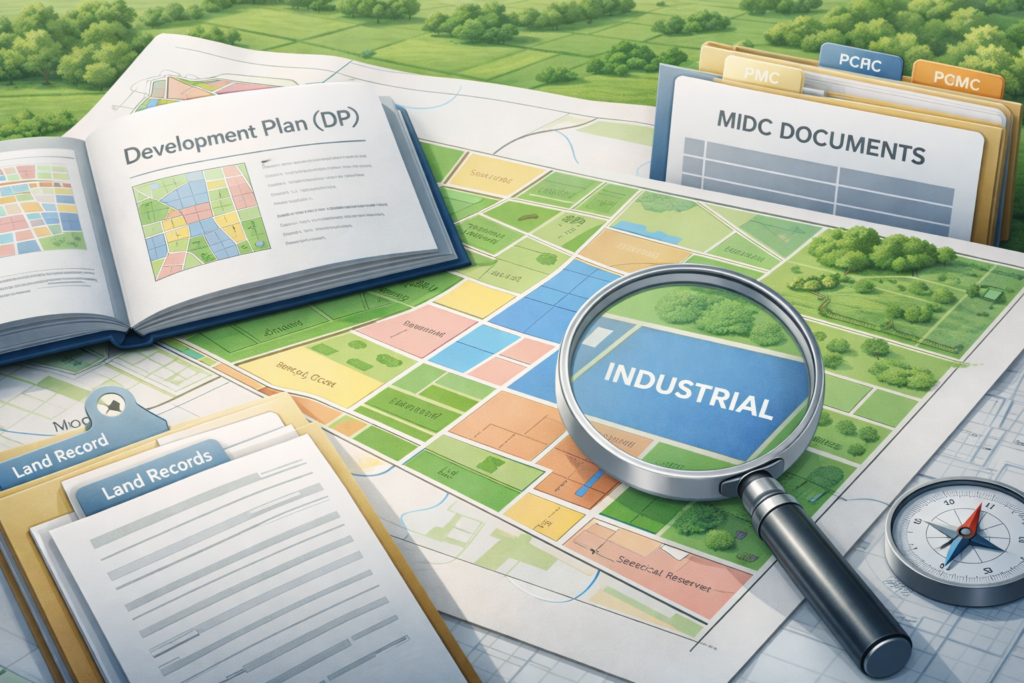
One of the most frequent mistakes is assuming that land can be used for industrial purposes simply because neighbouring plots are industrial or factories already exist nearby.
Why this is risky:
Land may still be classified as agricultural, residential, or under special reservations in the Development Plan (DP).
How to avoid it:
Always verify zoning status through the Development Plan, land-use records, and applicable regional authority (MIDC, PMC, PCMC, PMRDA, or Collector office).
Delaying NA Conversion and Land-Use Permissions
Many developers initiate planning and even construction-related activities before completing Non-Agricultural (NA) conversion and land-use approvals.
Why this is risky:
Delays in NA conversion can halt the project midway, leading to redesign, penalties, or stop-work notices.
How to avoid it:
Align NA conversion, zoning confirmation, and building approvals at the planning stage, not post-acquisition.
Treating Environmental Approvals as a Checklist
Environmental compliances such as MPCB Consent to Establish, Environmental Clearance, and fire approvals are often approached as documentation tasks rather than technical approvals.
Why this is risky:
Incorrect data, improper capacity planning, or non-aligned layouts can lead to rejection or repeated queries.
How to avoid it:
Integrate environmental consultants and compliance experts early into project design to ensure technical alignment.
Ignoring Local Authority-Specific Regulations
Each authority: MIDC, Municipal Corporations, PMRDA, or Collector-controlled areas; follows different rules for setbacks, FSI, access roads, and utilities.
Why this is risky:
Using generic approval assumptions often results in redesign and approval delays.
How to avoid it:
Understand authority-specific Development Control Regulations (DCR) before finalizing layouts and architectural plans.
Underestimating Infrastructure & Utility Approvals
Developers often assume that power, water, drainage, and road access will be easily available once construction is completed.
Why this is risky:
Utility approvals are frequently linked to capacity, location, and inter-department coordination.
How to avoid it:
Plan infrastructure approvals in parallel with land and building approvals, not at the end of the project.
Weak Title Due Diligence and Documentation Gaps
Relying solely on surface-level title verification or outdated land records is a common mistake.
Why this is risky:
Hidden encumbrances, access rights, or historical disputes can surface at advanced stages.
How to avoid it:
Conduct detailed legal, technical, and revenue record due diligence before acquisition and development.
Poor Sequencing of Approvals

Even when all approvals are obtained, incorrect sequencing can delay occupancy or operations.
Why this is risky:
Missing one approval can block the release of another (e.g., OC without final fire NOC or MPCB Consent to Operate).
How to avoid it:
Prepare a structured compliance roadmap covering pre-construction, construction, and post-construction stages.
Not Planning for Final Occupancy & Operational Approvals

Many projects focus heavily on construction but overlook final approvals like Occupancy Certificate, Consent to Operate, and final fire clearance.
Why this is risky:
Without these approvals, leasing, operations, or handover can be legally restricted.
How to avoid it:
Treat final approvals as a core project milestone, not an afterthought.
Why Compliance Should Be a Strategic Advantage
Compliance, when planned correctly, becomes a project accelerator rather than a bottleneck. Developers who integrate compliance planning early experience:
- Faster execution
- Better investor confidence
- Smoother leasing and handover
- Lower legal and operational risk
Final Thoughts
Most compliance issues are preventable with early planning, correct sequencing, and expert advisory. The difference between a delayed project and a successful one often lies not in execution but in compliance strategy.